The Problem Faculty Are Actually Trying to Solve
At EDNXT Lucknow, a vice chancellor put it plainly: “I don’t want more papers. I want my professors to finally have time to do research that people read, cite, and build on.” That frustration is widespread across Indian higher education. Research is no longer a side activity. It determines NIRF rankings, grant eligibility, international partnerships, and institutional reputation. Yet most faculty members spend their best hours on teaching logistics rather than scholarship. They just don’t have enough time to work on research papers.
High Output, Low Impact
India is now one of the world’s largest producers of academic research by volume. Thousands of papers are published every year, placing Indian institutions among the global leaders in output. But impact tells a different story.
On average, Indian research papers receive 70% fewer citations than their counterparts in the US or Europe. A typical paper here earns 10-15 citations while the global leaders average 25-30 or more. Many are published in low-visibility or predatory journals and never meaningfully enter global academic discourse. The consequences are real:
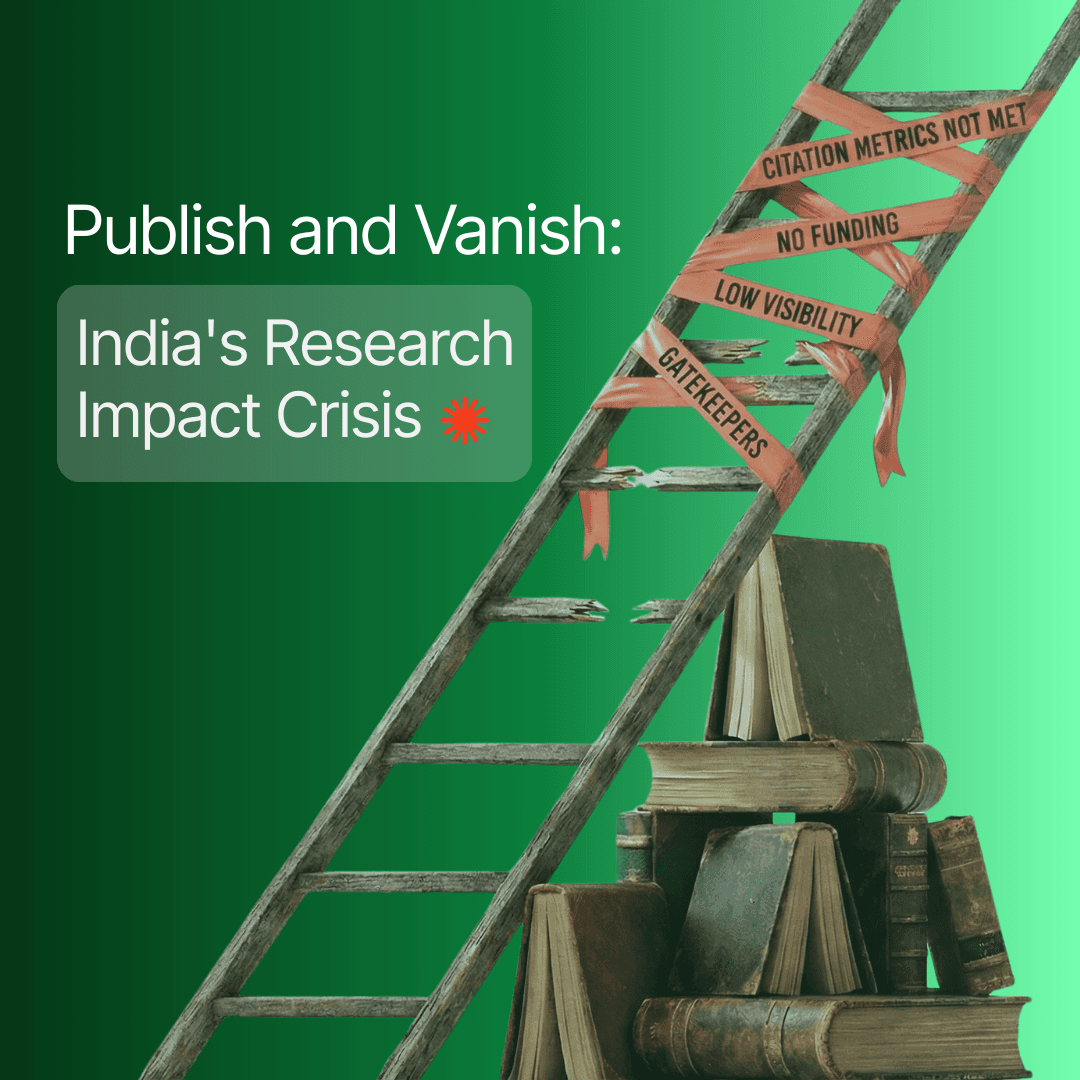
Faculty promotions are stalling because citation-based metrics are not met
Funding from bodies like DST, DBT, and ICSSR favors institutions with proven research influence
QS, THE, and NIRF rankings are lagging due to weak citation and collaboration signals
Weak research culture means fewer projects, internships or publications for students who are poorly competing with graduates from other institutions
Indian institutional credibility is eroding quietly but steadily
What began as “publish or perish” has become “publish and vanish”.
Why Research Time Keeps Getting Squeezed
Faculty are not failing to research. They are being consumed by everything around it. Lecture preparation, content formatting, assessment creation, grading, doubt resolution, reporting, and administrative compliance absorb the majority of academic time. Research happens after hours, during breaks, or not at all.
This is the bottleneck VidyaAI was built to remove.
VidyaAI: Reclaiming Time for Research That Matters
VidyaAI is a teacher-led Precision Learning AI layer that integrates with existing LMS or institutional systems. It works only on faculty-approved lecture content and materials, ensuring accuracy, trust, and academic control.
Its role is simple: remove repetitive teaching load so faculty can focus on thinking, writing and discovery.
In practice, VidyaAI:
Converts lecture videos or PDFs into structured notes, summaries, quizzes, assignments, and question banks within minutes
Handles the majority of routine student doubts through an AI Buddy trained only on institutional content
Enables multilingual, interactive learning so students master fundamentals independently
Reduces repetitive academic workload by roughly 60% in early pilots
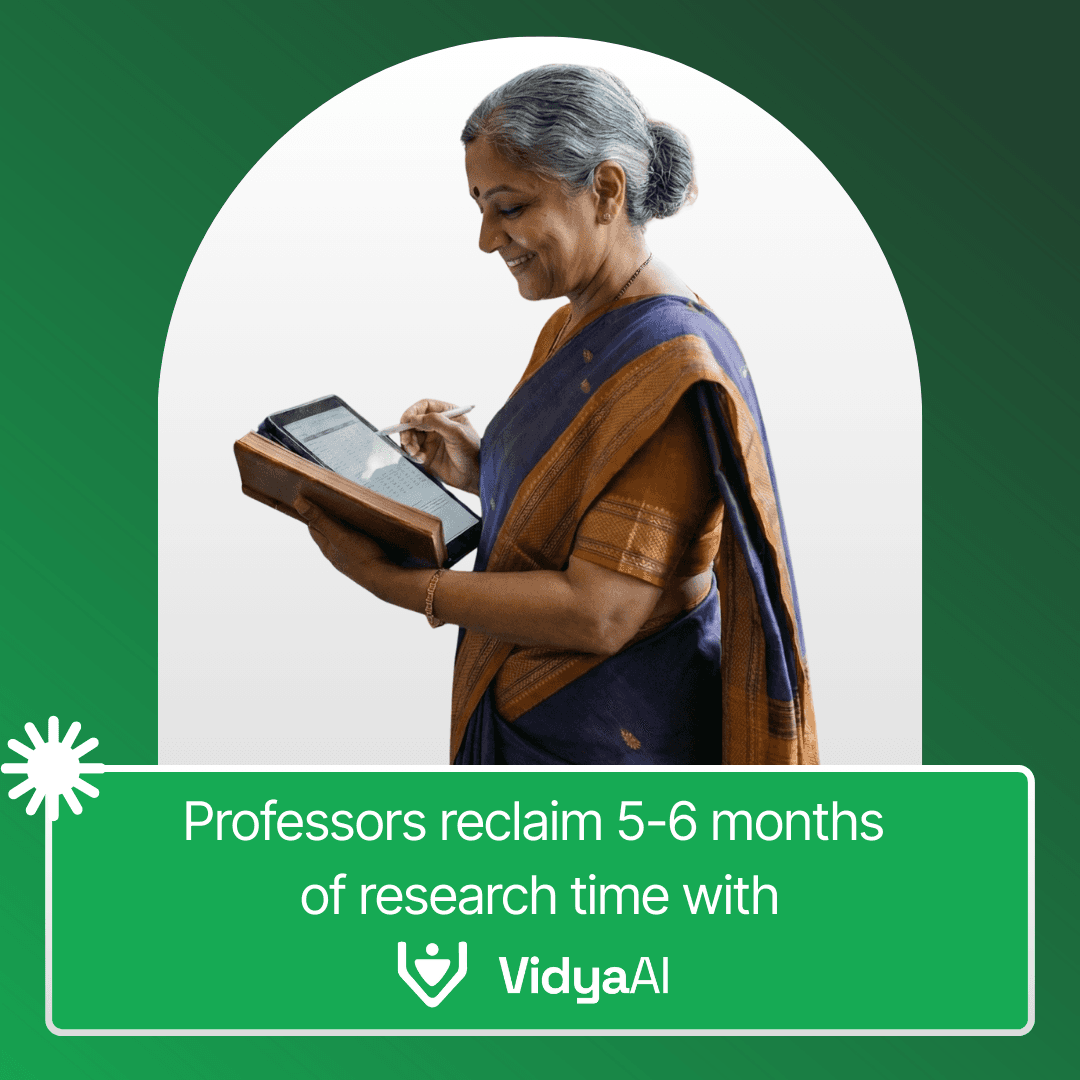
For most professors, this translates into 15 to 20 hours a week returned to research. That means, VidyaAI returns the equivalent of 5–6 months of dedicated research time to every professor annually, without reducing teaching quality or increasing headcount.
From Teaching Infrastructure to Research Enablement
Once teaching friction is removed, research capacity expands naturally.
VidyaAI analyzes years of lectures, assignments, and student interactions to surface recurring questions, conceptual gaps, and emerging themes. These patterns often point directly to viable research questions and paper ideas that would otherwise remain buried.
When faculty begin drafting, VidyaAI assists by organizing outlines, structuring sections, and summarizing literature from trusted academic sources such as uploaded material, journals, and books. All references remain transparent and fully verifiable. Faculty retain full authorship and judgment.
Student performance data adds another layer. Faculty can easily identify students with deep topic mastery and invite them into research projects or labs without manual tracking.
AI manages volume. Faculty drive insight.
Students as Research Contributors, Not Bystanders
VidyaAI’s guided workflows allow students to assist with literature reviews, data organization, early analysis, and draft feedback. Professors oversee outcomes without micromanaging the process. And all collaboration happens in one auditable workspace, replacing scattered emails and lost files. This leads to graduates leaving with real research exposure and responsible AI literacy, both increasingly valued by employers and doctoral programs.
What This Means for Rankings, Funding, and ROI
Research impact is now inseparable from institutional performance. VidyaAI generates concrete academic intelligence on engagement, learning outcomes, topic traction and faculty impact. This evidence feeds directly into NAAC, NBA, NIRF, QS, and THE submissions.
Institutions report measurable gains:
Higher-quality publications and stronger citation trajectories
Better alignment with UGC promotion and appraisal frameworks
Reduced exposure to predatory publishing risks
Increased student participation in credible research
New revenue through micro-credentials, executive programs, and online offerings built on existing lecture IP
When combined with improved retention and placements, institutions see a realistic 3-4x return within the first year.
The Choice Universities Now Face
Indian higher education does not lack ambition. It lacks bandwidth.
Universities can continue producing research at scale while struggling for influence. Or they can invest in infrastructure that restores time, strengthens scholarship, and turns teaching into a foundation for discovery. VidyaAI removes friction by reclaiming faculty time while generating ranking-ready evidence that helps in embracing funding opportunities like ICSSR, DST-SERB and NIRF.
The vice chancellor’s ask at the event was simple: give professors their time back.
Ready to learn how VidyaAI can unlock research legacy for your institution? Connect with us for a demo or a 30-day complimentary pilot.