Jan 7, 2026
The Cost of Delay: Why Higher Education Institutes (HEIs) Can’t Afford Slow AI Adoption Any Longer
By
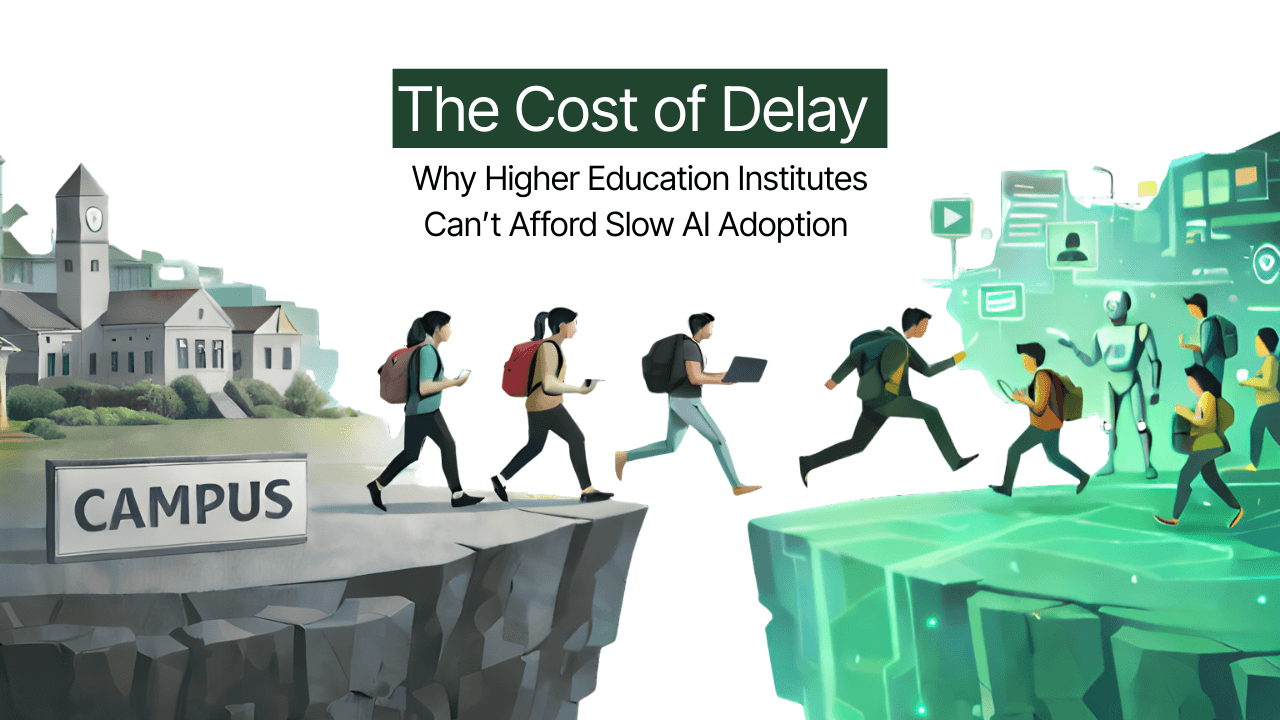
Walk into any campus today, and the contrast is obvious. Students are already living in an AI‑first world, using tools to summarise lectures, draft assignments, and explore careers, while most institutions are still debating the establishment of pilot committees. The result is an uncomfortable reality: classrooms hum with potential, but the systems around them are moving in slow motion. This isn’t just a technology gap; it’s a relevance gap in a market where the global AI in education segment was already valued at around USD 4 billion in 2023 and is projected to exceed USD 100 billion by 2030.
Students moved. Institutions didn’t.
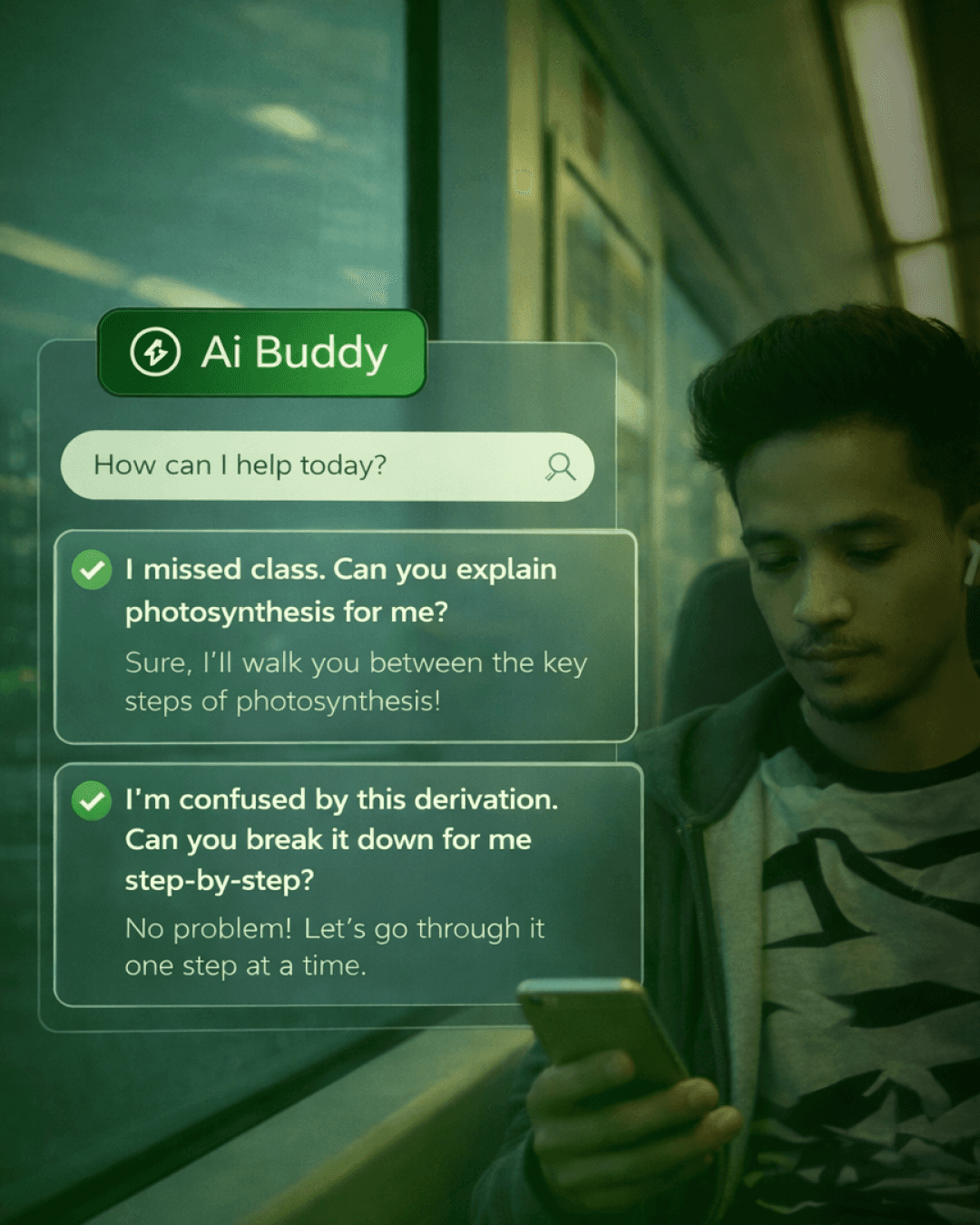
In the last few years, AI has quietly become the default study partner for millions of learners. Ask around, and you’ll hear the same pattern: “I missed class, so I asked an AI to explain the topic,” or “I didn’t understand the derivation, so I had it broken down step-by-step.” Meanwhile, many teachers are still working off ten‑year‑old notes, manually building question papers, and answering the same doubts across email, WhatsApp, and office hours. They are digital migrants teaching digital natives, with no bridge in the middle.
That mismatch has consequences. When learning support depends on how much time a tired faculty member has left at the end of the day, students quietly switch to generic tools and hope the output is “close enough.” Engagement drops. Misconceptions compound. The ‘smarter students’ find ways to self‑correct; everyone else falls behind, which shows up as lower completion, weaker outcomes, and a growing sense that the institution is not keeping up with the world outside its gates. Recent learning assessments in India have already shown just how wide these gaps are: among 18‑year‑olds, about 32.6% are no longer in the education system at all, and roughly 25% still struggle to fluently read a simple Grade II‑level text, while more than half cannot reliably solve a basic three‑digit‑by‑one‑digit division problem.
The lack of governance around AI on Campus
Here’s the part that rarely makes it into polite committee notes: most institutions have already let AI onto campus, just not on their own terms. A recent EY–Parthenon report with FICCI finds that around 60% of Indian HEIs now allow students to use AI tools, yet only about 56% have formal AI‑related policies, so usage is sprinting while governance walks.
On top of that, over half of surveyed institutions are already using generative AI to create learning materials, but faculty training and governance are still described as “uneven,” raising real questions about integrity, ownership, and consistency of learning quality. AI is no longer an abstract future; it is embedded in daily teaching-whether institutions are ready for it or not.
Delay has a compounding cost
“Waiting until AI is mature” feels safe, but the data points the other way: early adopters of AI routinely report 30–50% efficiency gains in core workflows and measurable lifts in outcomes once AI is embedded into everyday processes instead of being treated as an experiment on the side. In higher education, AI is already called “non‑negotiable” for marketing and enrollment, with institutions using it for prospecting, nurturing, and analytics, seeing stronger lead quality, faster follow‑up. So your hesitation for AI on Campus is widening the gap, and your competitors are compounding efficiency, insight, and enrollment gains while your institution might quietly slide into the bottom half of the market with weaker pipelines, higher costs, and less room to catch up.
Why “let students use ChatGPT” is not an AI strategy
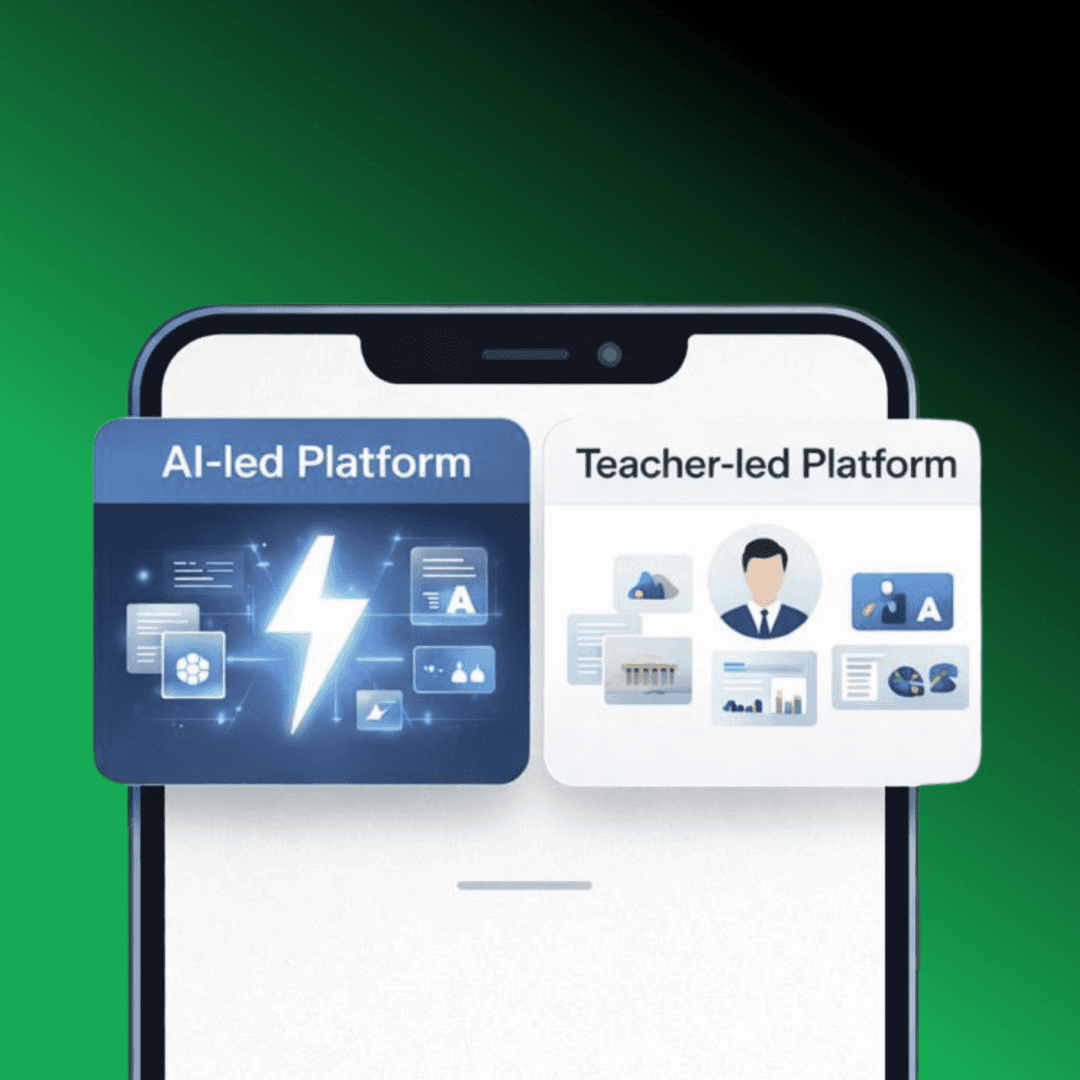
Many campuses assume they’ve “ticked the AI box” because students are already using ChatGPT or other public LLMs. This is like saying you have a library because students Google. These tools are built for open conversation, not for accreditation‑ready teaching and learning. They can hallucinate, mix random external sources, or provide answers that contradict your syllabus and academic policy.
More importantly, they are AI‑led, not teacher‑led, so faculty have no control over how concepts are framed, which examples are used, or whether the reasoning aligns with assessment. Quality cells cannot audit the learning journey. Accreditors cannot see clear evidence that technology is strengthening pedagogy rather than undermining it. At best, you get pockets of clever usage with no institutional leverage. At worst, you get a quiet integrity problem and a reputation hit you only notice when placements and applications start dipping.
What a contextual AI layer looks like
VidyaAI is the intelligent layer-the part that actually plugs into how your university works. VidyaAI is a teacher-led precision learning platform that connects to your existing LMS or ERP, treating your own lectures and materials as the single source of truth.
In practice, three things change immediately:
Teaching becomes AI-powered, not AI-replaced: Faculty members upload videos or documents, and VidyaAI auto-generates structured notes, smart summaries, quizzes, assignments, and question banks in minutes, while giving teachers full control to edit and approve everything before it reaches students.
Learning becomes precise and interactive: Students get real‑time transcription, multilingual smart summaries, and AI Buddy that answers doubts anytime using only institutional content, turning passive videos and PDFs into guided, conversational learning journeys.
The campus gets performance data: Every interaction feeds back into precise analytics on engagement, comprehension and learning gaps, so institutions can see what’s working, who is stuck and where to intervene and scale its ROI.
After adoption, VidyaAI delivers three clear outcomes
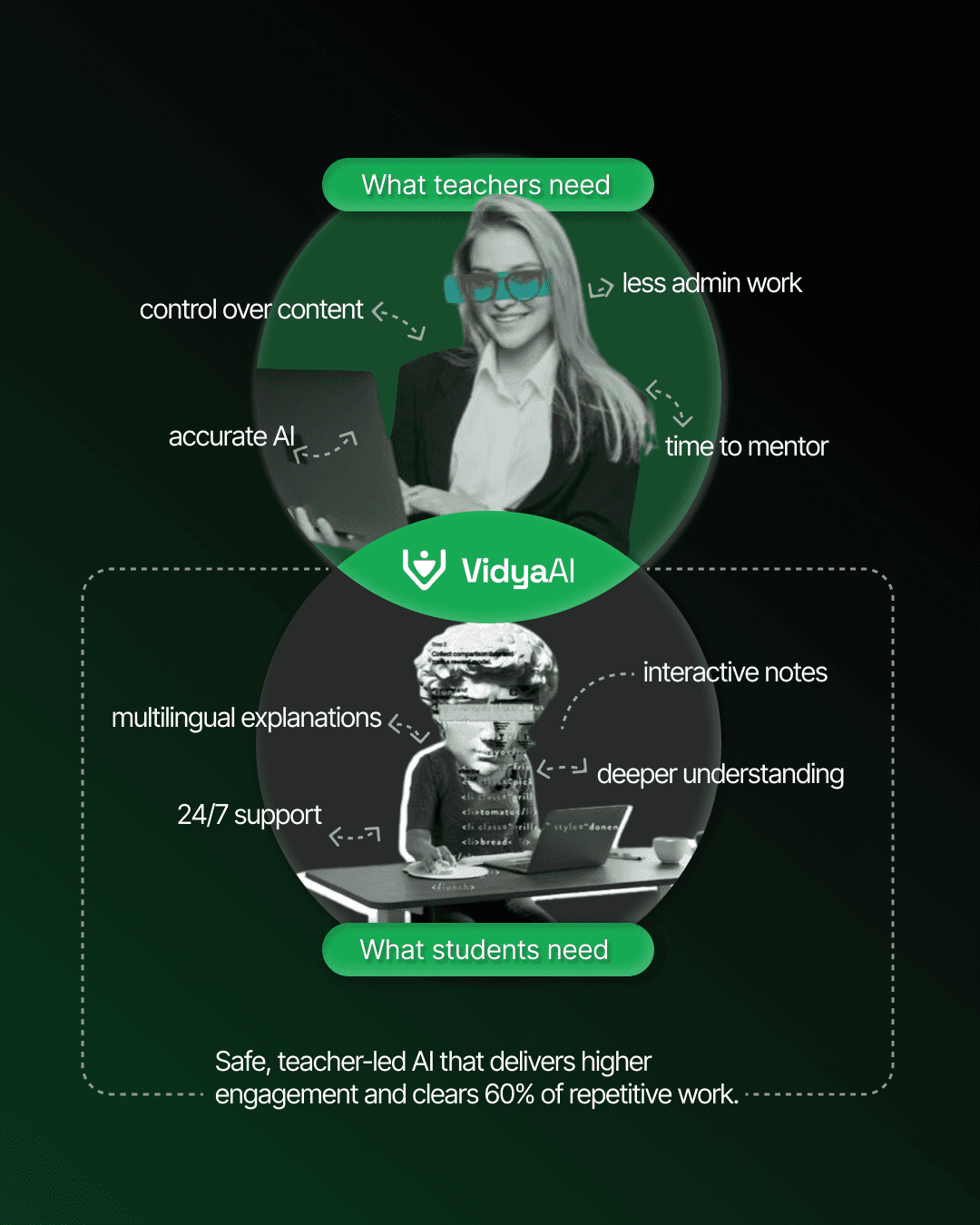
Reduction of teacher workload by 60%: Faculty are overloaded with grading, content prep, reporting, and repetitive doubt resolution. VidyaAI removes this noise by auto-generating notes, assessments, answer keys and handling routine student queries through AI Buddy. Result: ~60% reduction in repetitive workload, while teachers retain full control.
From passive listeners to job‑ready learners: For students, the difference between “AI somewhere on campus” and “AI wired into the learning journey” is night and day. VidyaAI transforms static PDFs and lecture videos into interactive notes, knowledge pins, and guided problem-solving in the teacher’s own framework and language. Students learn actively, revise faster and use AI responsibly within faculty-approved boundaries. Institutions that can demonstrate this kind of AI-enabled learning stand out in placements, industry partnerships and admissions as reliable talent pipelines, not just degree providers.
Accreditation and long‑term ROI: Accreditation bodies and ranking frameworks have quietly raised the bar. It’s no longer enough to show that you own an LMS; the question is how intelligently you use it. As hybrid and blended learning become permanent features of higher education in India, evaluators are looking for concrete evidence of technology‑enabled design, delivery and documentation of learning. VidyaAI generates audit-ready evidence: lecture impact, cohort learning gaps, engagement trends, and outcome-based progress data aligned to NAAC, NBA, and global ranking criteria. Combined with lower dropouts, better placements, and the ability to convert lectures into scalable IP for micro-credentials, executive education, and distance learning, institutions see a realistic 3–4x ROI within the first year.
Act now or fall behind
Across higher education leadership forums, one message is now unmistakable: AI that helps teachers teach better is no longer optional; it is the baseline. Institutions are being judged not on whether they “have AI,” but on whether faculty can use it confidently, responsibly, and at scale to deliver better learning outcomes. Delaying adoption or inaction widens the gap between what students learn and what employers expect, while accreditors quietly raise expectations around technology-enabled teaching and evidence-based learning.
Institutions that move now turn this pressure into an advantage: reduced faculty fatigue, stronger student outcomes, better enrollment performance, and preserved academic integrity through teacher-led AI. Those who wait pay the price later in lost relevance, reputation, and revenue.
Ready to learn what VidyaAI can do for your organization? Connect with us for a demo or a 30-day complimentary pilot.